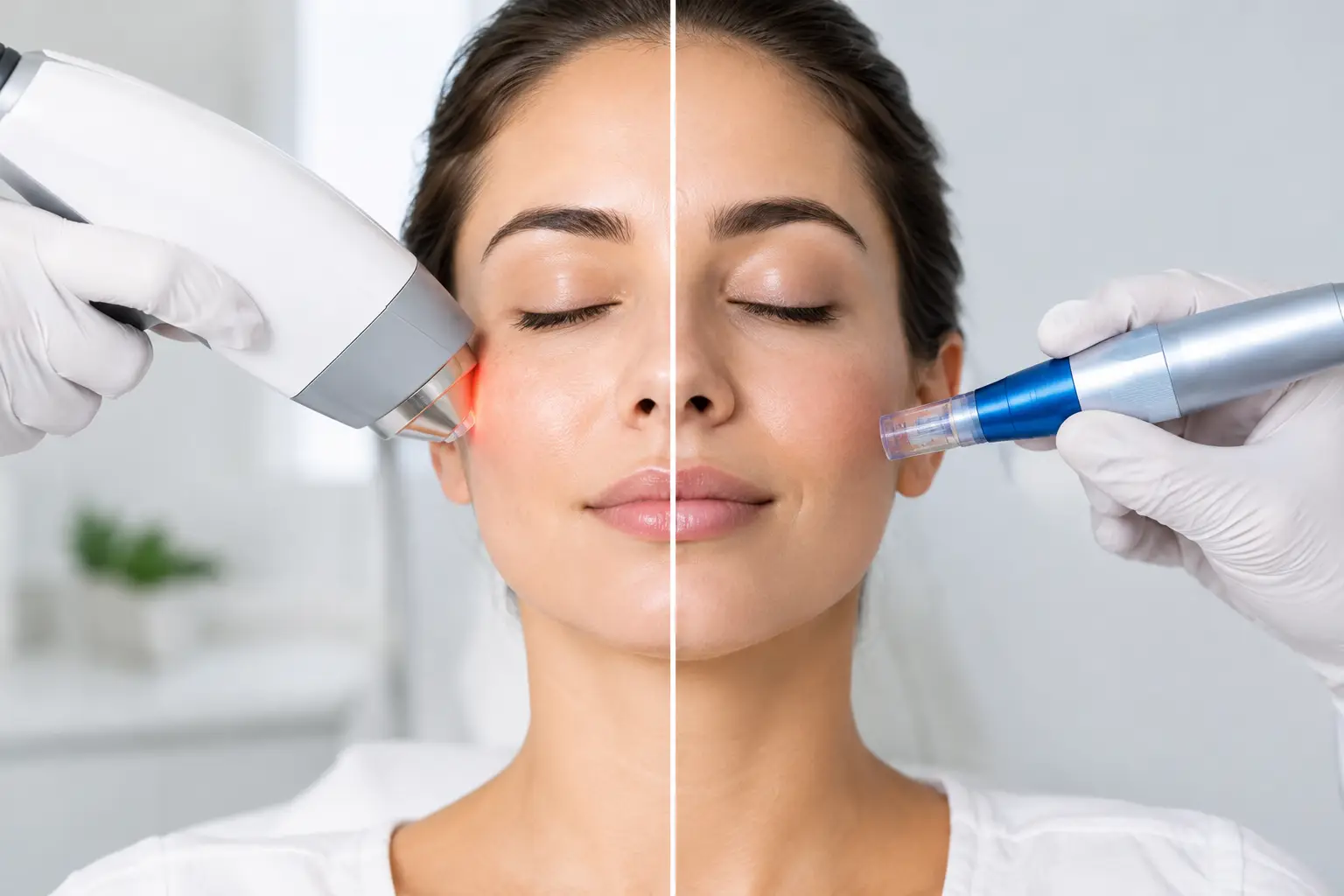
A treatment that promises smoother, clearer-looking skin can sound appealing until you are deciding between two very different approaches. When considering laser resurfacing versus microneedling, the best choice is rarely about which treatment is “better.” It is about your skin concerns, skin tone, timeline, comfort with downtime, and the results you hope to see.
Both treatments can support collagen production and improve the appearance of common concerns such as fine lines, acne scars, enlarged pores, uneven texture, and sun-related changes. However, they work differently, have different recovery periods, and may be better suited to different patients.
How laser resurfacing works
Laser resurfacing uses focused light energy to target the skin. Depending on the type of laser and treatment settings, the energy may remove very thin layers of damaged outer skin, heat deeper skin structures to encourage collagen remodeling, or do a combination of both.
Ablative lasers remove portions of the skin’s surface. They can produce more noticeable improvement in significant wrinkles, deeper scars, and extensive sun damage, but they also require more recovery time. Non-ablative lasers heat tissue beneath the surface without removing as much skin. These treatments usually involve less downtime, though several sessions may be needed for the desired improvement.
Fractional laser treatments treat small columns of skin while leaving surrounding tissue intact. This approach can support healing while still addressing texture and tone concerns. At Castle Wellness & Laser Center, treatment planning should begin with an evaluation of your skin, medical history, and desired recovery timeline.
Laser resurfacing is often considered when someone wants to address more pronounced skin changes. It may be especially helpful for visible photoaging, deeper lines around the mouth or eyes, uneven pigment, or acne scarring that has not responded to gentler treatments.
How microneedling works
Microneedling uses a device with very fine needles to create controlled micro-injuries in the skin. These tiny channels prompt the body’s natural wound-healing response, which can support new collagen and elastin production over time.
The treatment does not remove layers of skin in the way an ablative laser does. Instead, it focuses on encouraging gradual skin renewal. Many patients choose microneedling for mild to moderate acne scars, fine lines, large-looking pores, uneven texture, or early signs of skin aging.
After a microneedling session, skin often looks pink or feels warm, similar to a mild sunburn. This usually improves within a few days, though individual healing varies. Improvements are gradual because collagen remodeling takes time. A series of treatments, often spaced several weeks apart, is commonly recommended.
Microneedling may be a practical option for people who want limited downtime and are comfortable with a more gradual approach. It can also be appropriate for a broader range of skin tones when performed carefully by a qualified professional, since certain laser settings can carry a higher risk of pigment changes in darker skin.
Laser resurfacing versus microneedling: key differences
The most noticeable difference is intensity. Laser resurfacing can be more powerful, particularly with ablative options, and may create more dramatic change in a single treatment. That added intensity usually comes with more redness, peeling, sensitivity, and time away from work, social events, or outdoor activities.
Microneedling is generally less aggressive. It often has a shorter recovery period, but it may require multiple sessions to achieve meaningful improvement. Results tend to build slowly over several months as collagen develops.
Cost can also differ. Laser resurfacing often has a higher upfront cost because of the technology, level of treatment, and recovery support involved. Microneedling may cost less per session, but a treatment series can change the overall investment. A consultation provides the clearest picture because pricing depends on the treatment area, goals, and recommended plan.
Your skin tone matters as well. Post-inflammatory hyperpigmentation, or darkening after inflammation, can occur after either procedure. The risk can be higher with certain laser treatments, especially if settings are not well matched to the patient’s skin type. An experienced provider can discuss whether a laser, microneedling, or another option is the safer choice for your complexion and concerns.
Which concerns respond best to each treatment?
There is overlap, but each option has strengths.
Laser resurfacing may be a better fit for more advanced sun damage, deeper wrinkles, pronounced texture irregularities, and certain scars. It can also help improve the appearance of pigment concerns, although the type of discoloration and your skin tone need careful evaluation first.
Microneedling is often chosen for mild to moderate acne scars, fine lines, texture, and pores. It may be a good starting point for patients who have never had a cosmetic skin treatment or who cannot accommodate a longer recovery period.
Neither treatment is a one-size-fits-all solution. For example, active acne should typically be addressed before treating scars. Melasma and other pigment conditions can be sensitive to heat and inflammation, so the wrong procedure could make discoloration worse. Patients with a history of keloid scarring, frequent cold sores, certain autoimmune conditions, or recent use of isotretinoin should disclose that information before scheduling treatment.
What recovery looks like
With microneedling, many people return to regular activities within one to three days. Redness, mild swelling, tightness, and dryness are common early on. Makeup may need to wait until the skin has settled, based on your provider’s instructions. Gentle skincare, avoiding heat and heavy sweating initially, and consistent sunscreen use are essential.
Laser recovery varies significantly. A lighter non-ablative or fractional treatment may cause redness and flaking for several days. More aggressive resurfacing can involve swelling, crusting, oozing, peeling, and redness that lasts longer. You may need to adjust your schedule and follow a more detailed aftercare routine.
Sun protection is not optional after either procedure. Freshly treated skin is more vulnerable to irritation and pigment changes. Daily broad-spectrum sunscreen, shade, hats, and avoiding intentional tanning protect both your healing skin and your results.
Questions to ask before choosing a treatment
A good consultation should feel like a conversation, not a sales pitch. Ask what specific concern the provider is treating, how many sessions are likely needed, what degree of improvement is realistic, and how much downtime to plan for. It is also reasonable to ask about the provider’s experience with your skin type and whether before-and-after photographs reflect results from patients with similar concerns.
Be open about medications, supplements, allergies, past cosmetic procedures, skin reactions, and any history of cold sores. These details can affect preparation, treatment settings, and whether preventive medication is appropriate.
It also helps to share your real-life schedule. If you have a wedding, family photos, travel, or an important work event coming up, a treatment with peeling or prolonged redness may not fit your timing. Planning ahead can prevent unnecessary stress.
A thoughtful choice starts with an evaluation
Laser resurfacing and microneedling can both be valuable tools for healthier-looking skin, but the right treatment depends on more than a trend or a single before-and-after photo. Your provider should evaluate your skin closely, discuss the trade-offs honestly, and help you choose an approach that respects your goals, skin health, and available recovery time.
The most satisfying results usually come from a plan that fits your life as well as your skin – one you can follow comfortably, protect with good aftercare, and feel confident about from the first consultation onward.