A stuffy nose every spring, hives after a meal, or coughing around a pet can make you want answers quickly. When comparing an allergy blood test vs skin test, the best choice is not always the same for every patient. Your symptoms, medical history, medications, skin condition, and the suspected trigger all matter.
Both tests can help identify substances that may be causing an allergic response. But neither test should be interpreted alone. A positive result shows that your immune system recognizes an allergen. It does not automatically prove that the allergen is the cause of your symptoms. A thoughtful conversation with your healthcare provider helps put testing results into the right context and leads to a practical care plan.
Allergy Blood Test vs Skin Test: The Main Difference
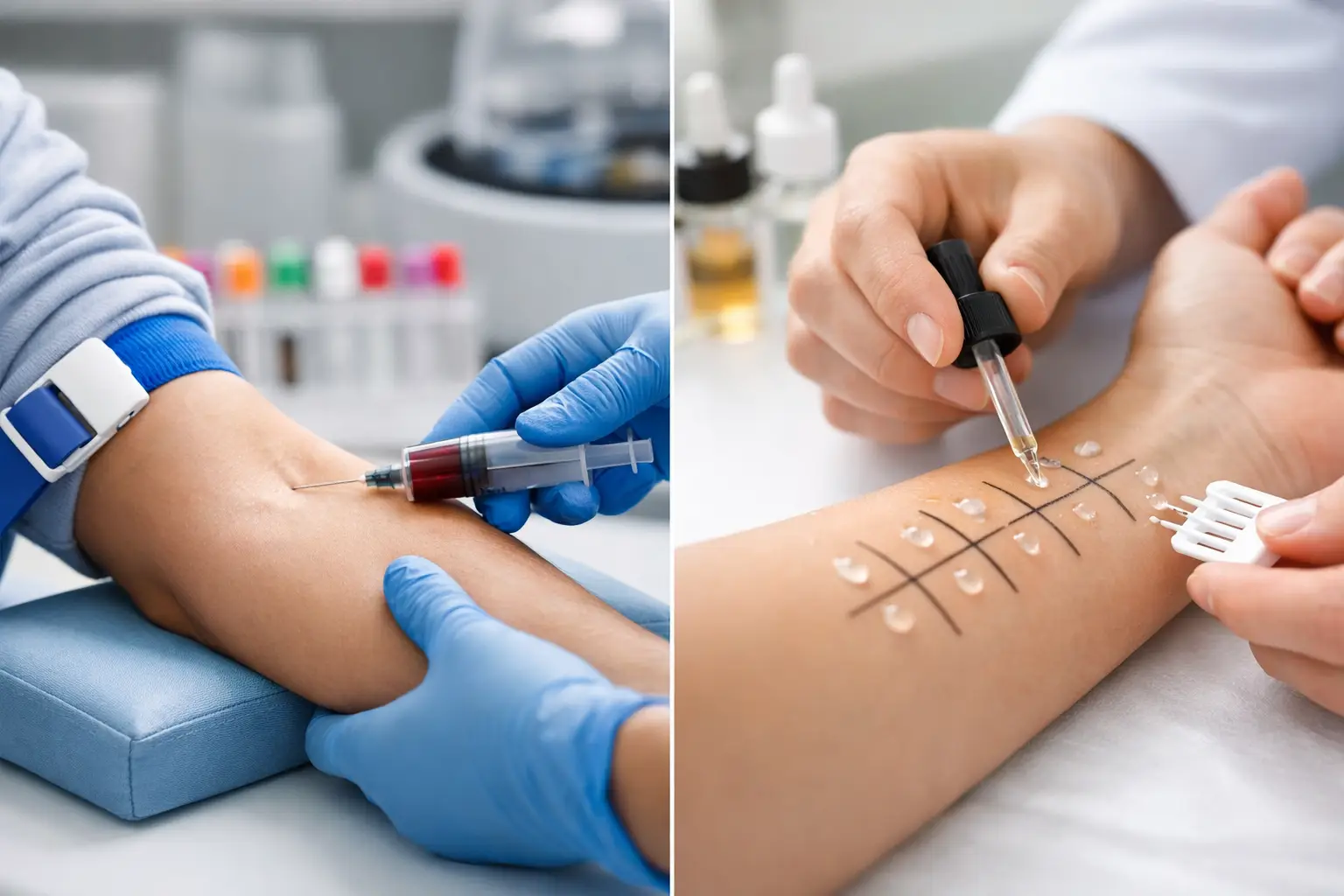
Skin testing checks for an immediate reaction on the skin after a tiny amount of an allergen is introduced. It is commonly used to assess possible allergies to environmental triggers such as pollen, dust mites, mold, pet dander, and sometimes foods or insect stings.
An allergy blood test measures allergen-specific immunoglobulin E, often called IgE, in a blood sample. IgE is an antibody associated with many immediate allergic reactions. The lab evaluates whether your blood contains IgE that reacts to particular allergens.
Both approaches are useful tools. The question is usually not which test is universally better, but which one fits your situation safely and provides the most helpful information.
How Skin Allergy Testing Works
The most common type of skin testing is a skin prick test. A clinician places small drops of possible allergens on the skin, typically the forearm or upper back. The surface of the skin is then lightly pricked so the allergen can enter the top layer.
If you are sensitive to a substance, a small raised, itchy bump may appear within about 15 to 20 minutes. The reaction is compared with control sites to help the clinician interpret the result. Skin prick testing is generally quick, and patients can often discuss the results during the same visit.
A positive skin test can feel like a mosquito bite for a short time, but serious reactions are uncommon when testing is performed in an appropriate medical setting. Your care team will monitor you and can treat a reaction if needed.
When a skin test may be a good fit
Skin testing may be especially useful when you need timely answers and can safely pause medications that interfere with results. It is often chosen for patients with suspected seasonal allergies, ongoing nasal congestion, asthma symptoms linked to environmental exposures, or symptoms that occur around animals.
However, many antihistamines can suppress the skin response and lead to inaccurate results. Your provider may give you instructions about medicines to avoid before testing. Do not stop prescribed medication on your own, particularly medication used for asthma, heart conditions, anxiety, sleep, or severe allergic reactions.
Skin testing may also be less practical if you have severe eczema, widespread hives, a skin infection, or another condition that leaves too little clear skin for reliable testing. Some patients are also unable to stop antihistamines because their symptoms become too uncomfortable.
How an Allergy Blood Test Works
An allergy blood test starts with a routine blood draw. The sample is sent to a laboratory, which measures IgE antibodies to selected allergens. Results usually take longer than a skin test, often several days, because they require laboratory processing.
The biggest convenience is that antihistamines generally do not affect blood test results. This can make a blood test a helpful option for someone who needs to continue medication, has an active skin condition, or cannot undergo skin testing for another reason.
Blood testing can also be useful when there is concern that a skin test could trigger a stronger reaction, although your provider will evaluate that risk based on your history. It may be preferred for patients who find skin testing difficult or for young children when keeping the testing area still is challenging.
The trade-off is that a blood test requires a needle and does not provide immediate results. Depending on the allergen and laboratory method, it may also be more likely to identify sensitization that does not match real-life symptoms. That is why a result should always be reviewed alongside your history.
Accuracy Depends on the Question Being Asked
Patients often ask which test is more accurate. In many cases, both skin and blood tests can provide useful, reliable information when they are ordered for the right reason and interpreted by an experienced clinician.
The most meaningful testing begins with a detailed symptom history. Your provider may ask when symptoms occur, how quickly they begin, whether they happen indoors or outdoors, what you ate or touched beforehand, and whether the problem changes by season or location. This information helps narrow the list of allergens to test.
Testing a broad panel without a clear history can produce confusing results. For example, a person may test positive for a food but eat that food regularly without symptoms. Avoiding it unnecessarily could make meals more stressful and restrict nutrition without benefit.
False negatives can happen, too. Medication use, timing, the quality of the skin response, and the specific allergen being tested can all affect results. If your test is negative but your symptoms strongly suggest an allergy, your provider may recommend repeat testing, a different method, or evaluation for another cause.
Conditions such as nonallergic rhinitis, viral infections, sinus problems, reflux, asthma, food intolerance, and skin irritation can resemble allergies. Testing helps, but it is one piece of the larger clinical picture.
Food Allergies Need Extra Care
Food allergy testing deserves particular caution. A positive IgE blood test or skin test does not necessarily mean you will have a reaction when you eat that food. Food allergy diagnosis requires a careful review of what happened after eating it, including the timing and type of symptoms.
If you have had trouble breathing, throat tightness, fainting, repeated vomiting, or widespread hives after eating a food, seek prompt medical care and discuss an emergency action plan. Do not try to confirm a suspected serious food allergy at home by eating the food again.
In some situations, an allergy specialist may recommend a supervised oral food challenge. This is performed in a controlled medical setting, not as a do-it-yourself test. It can help clarify whether a positive test reflects a true clinical allergy.
What About Patch Testing?
Patch testing is different from both skin prick testing and IgE blood testing. It is mainly used to investigate delayed skin reactions, such as contact dermatitis from substances like fragrances, metals, preservatives, or ingredients in personal care products.
With patch testing, allergens are placed on the back and left in contact with the skin for a period of time. Reactions are checked later, often over several days. If your concern is a rash that appears well after contact with a product, patch testing may be more relevant than an immediate allergy test.
Preparing for Your Appointment
Before testing, write down the details of your symptoms. Include when they started, how long they lasted, potential exposures, foods or medications involved, and anything that made them better or worse. Photos of hives, swelling, or rashes can also be useful because visible symptoms may be gone by the time of your visit.
Bring a current medication list, including over-the-counter allergy medicines, supplements, inhalers, and topical creams. Your provider can tell you whether any medication needs to be adjusted before a skin test. For a blood test, standard blood draw preparation is usually all that is needed unless you are having other lab work at the same appointment.
Be clear about any history of severe reactions. This includes reactions to foods, insect stings, latex, medications, or previous allergy testing. That information helps your care team choose an approach that prioritizes both answers and safety.
Choosing the Test That Works for You
A skin test may be the practical choice when you can pause interfering antihistamines, have healthy skin available for testing, and want results during the visit. An allergy blood test may make more sense when you need to continue antihistamines, have significant skin symptoms, or prefer a blood draw over skin pricks.
For many San Antonio families, allergy symptoms are not only seasonal. Indoor allergens, pets, mold, workplace exposures, and foods can all complicate the picture. A primary care provider can help identify whether testing is appropriate, select a focused group of allergens, and discuss next steps such as symptom treatment, avoidance strategies, medication, or referral when needed.
At Castle Hills Family Practice, patients can discuss allergy concerns as part of convenient, whole-person primary care. The goal is not simply to produce a test result. It is to understand what is affecting your daily life and help you move forward with a plan that makes sense for you and your family.