A small blister can become a serious problem faster than many people expect when diabetes is involved. This guide to diabetes foot care focuses on the everyday habits that help you spot concerns early, protect circulation and sensation, and know when a call to your medical provider should not wait.
Diabetes can affect the nerves and blood vessels in your feet. Some people develop neuropathy, which can reduce their ability to feel pain, heat, pressure, or a small injury. Others have reduced circulation, which can make it harder for a wound to heal. That combination means a cut, crack, or pressure spot may go unnoticed until it has become more difficult to treat.
The goal is not to be fearful about your feet. It is to make foot care a reliable part of your diabetes routine, much like taking medication, monitoring blood sugar, or attending regular checkups.
Why daily foot care matters with diabetes
A healthy foot can usually signal trouble with pain. If you step on something sharp, develop a blister from a shoe, or burn your skin on hot pavement, discomfort tells you to stop and look. When sensation is reduced, that warning signal may be faint or absent.
High blood sugar over time can also affect the small blood vessels that bring oxygen and nutrients to tissues. Healing may take longer, and infection can become more serious. Good glucose management, blood pressure care, and cholesterol management all support foot health, but daily attention gives you another layer of protection.
Foot problems are not inevitable for people with diabetes. Many can be prevented or addressed early with consistent care, well-fitting footwear, and routine medical follow-up.
A simple daily diabetes foot care routine
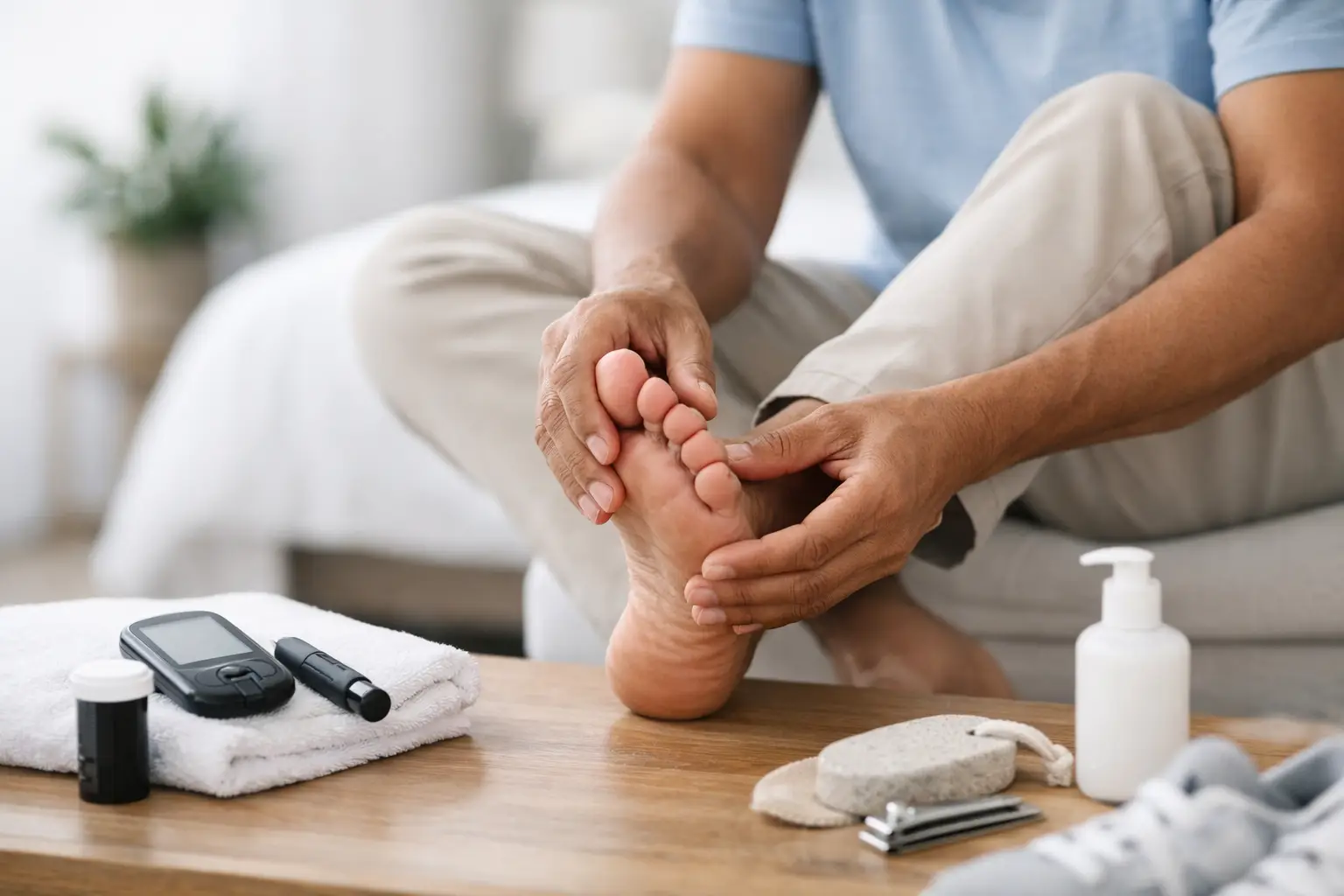
Choose a time you can maintain, such as after a shower or before putting on socks in the morning. The routine usually takes only a few minutes. Look at the tops, soles, sides, heels, and spaces between your toes. If it is difficult to see the bottoms of your feet, use a hand mirror or ask a family member to help.
Check for cuts, scratches, blisters, redness, swelling, drainage, cracks, calluses, corns, ingrown toenails, or changes in skin color. Also notice whether one foot feels warmer than the other. New warmth and swelling can be signs that deserve a prompt call to your provider, especially if you have little or no pain.
Wash your feet each day with warm, not hot, water and mild soap. Test the water with your elbow or a thermometer if you have decreased feeling in your feet. Avoid soaking your feet for a long time, since prolonged moisture can dry and weaken the skin. Dry carefully, particularly between the toes.
Apply a thin layer of moisturizer to dry skin on the tops and bottoms of the feet. Keep lotion out from between the toes, where excess moisture can encourage skin breakdown or fungal infection. If your heels are cracked or your skin is persistently dry, mention it during your next appointment rather than trying harsh treatments at home.
Shoes and socks are part of prevention
Wear clean, dry socks and shoes whenever you are walking, including indoors. Going barefoot at home, on a patio, or around a pool increases the chance of a cut, splinter, or burn that you may not feel. Choose socks without tight elastic bands or thick seams that rub your skin. Moisture-wicking socks can be helpful if your feet sweat often.
Shoes should have enough room in the toe box, a supportive sole, and a comfortable fit from the first wear. Do not count on a shoe that pinches or rubs to stretch out later. Before putting shoes on, feel inside for a pebble, loose lining, or object that could cause pressure.
It depends on your foot shape, activity level, circulation, and any existing deformities whether an over-the-counter shoe is enough. If you have loss of sensation, a history of ulcers, foot deformities, or recurring pressure areas, your provider may recommend diabetic shoes, inserts, or evaluation by a foot specialist.
Nail and skin care: keep it gentle
Trim toenails straight across after bathing, when they are softer, and smooth sharp edges with a nail file. Do not cut deeply into the corners of the nail. If you cannot see or reach your feet safely, have thick or curved nails, or have decreased sensation or circulation, professional nail care is a safer choice.
Do not use razor blades, corn removers, or medicated pads to remove calluses or corns on your own. These products can damage healthy skin and create an open area where infection can develop. A provider can assess why the callus formed and recommend safe treatment. Recurrent calluses often point to friction or pressure that needs to be addressed with better footwear or inserts.
Avoid heating pads, hot water bottles, and electric blankets directly on your feet. They can cause burns without you realizing it. In San Antonio’s hot weather, remember that sidewalks, pool decks, and vehicle floors can become hot enough to injure bare skin quickly.
Warning signs that need a call
Contact your primary care provider promptly if you notice a new cut, sore, blister, crack, drainage, redness, swelling, warmth, or color change on either foot. A wound that does not start improving within a day or two should be assessed, even if it seems minor. New numbness, burning, tingling, pain at rest, or changes in the shape of a foot also deserve attention.
Do not wait for a routine visit if a wound is deep, has pus or a bad odor, becomes increasingly red or swollen, or is paired with fever, chills, or feeling unwell. Seek urgent medical care for black or blue skin, a cold or pale foot, rapidly spreading redness, severe swelling, or a foot injury you cannot safely evaluate. These can signal problems that need timely treatment.
If you do find a small cut, wash it gently with soap and water, pat it dry, and cover it with a clean dressing. Avoid harsh antiseptics unless your clinician has instructed you to use them. Keep pressure off the area as much as possible and call for guidance. Do not try to treat a suspected infection at home.
Keep foot care connected to your diabetes plan
Foot health is closely tied to the rest of your care. Keeping blood sugar within the range you and your clinician have discussed can help reduce the risk of nerve and circulation complications over time. Staying active in ways that are safe for your feet, avoiding tobacco, eating for heart health, and taking prescribed medications all matter.
At regular diabetes visits, ask for a foot examination. Your clinician may check pulses, skin condition, sensation, reflexes, and any areas of pressure. Be sure to bring up changes that seem minor. A shoe that suddenly feels tight, a new patch of numbness, or a callus that keeps returning can provide useful clues before a larger problem develops.
Castle Hills Family Practice can help patients manage diabetes as a whole, including routine monitoring and practical guidance when a foot concern arises. Same-day care may be appropriate when you discover a new wound or change and need timely evaluation.
Make the routine easy to maintain
The best routine is one you will actually do. Keep a mirror where you dress, place moisturizer near your towel, and make checking inside your shoes part of putting them on. If you use a blood sugar log or phone reminder, add a daily foot check to it.
A few intentional minutes can protect your mobility, comfort, and independence. When something looks different, trust that observation and ask for help early. Your feet carry you through work, family life, and everyday errands – they deserve the same steady attention you give the rest of your diabetes care.