A blood pressure number taken during a rushed morning, after coffee, or while answering a work call may not tell the full story. Learning how to track blood pressure consistently gives you and your primary care provider a clearer picture of your heart health between appointments. A simple home routine can help identify patterns early, confirm whether treatment is working, and make medical visits more productive.
Blood pressure naturally changes throughout the day. Stress, activity, pain, medications, sleep, meals, and even a full bladder can affect a reading. The goal is not to chase one perfect number. It is to collect accurate readings over time, using the same method, so your care team can interpret the trend.
Start With the Right Blood Pressure Monitor
For most adults, an automatic upper-arm blood pressure monitor is the most practical choice for home use. Wrist and finger monitors can be convenient, but they are more sensitive to positioning and may be less reliable. If you use a wrist monitor, ask your provider to compare it with an office reading before relying on it.
Cuff size matters as much as the monitor itself. A cuff that is too small can read artificially high, while one that is too large can read low. Check the monitor packaging for arm-circumference guidance, especially if you have a larger or smaller upper arm.
Choose a monitor with a digital display that stores readings if possible. Memory features can be helpful, but do not depend on them alone. Keep a written or digital log that you can easily bring to appointments. If you are unsure whether your monitor is accurate, bring it to a visit and ask your care team to compare it with their equipment.
How to Track Blood Pressure for Reliable Readings
A consistent routine is more useful than frequent, random checks. Many people are asked to check blood pressure in the morning before medications and breakfast, and again in the evening before dinner or bedtime. Your provider may recommend a different schedule based on your health history, medications, pregnancy, or recent readings.
Before measuring, avoid smoking, caffeine, alcohol, and exercise for at least 30 minutes when possible. Empty your bladder, then sit quietly for five minutes. These small steps can prevent an avoidable high reading.
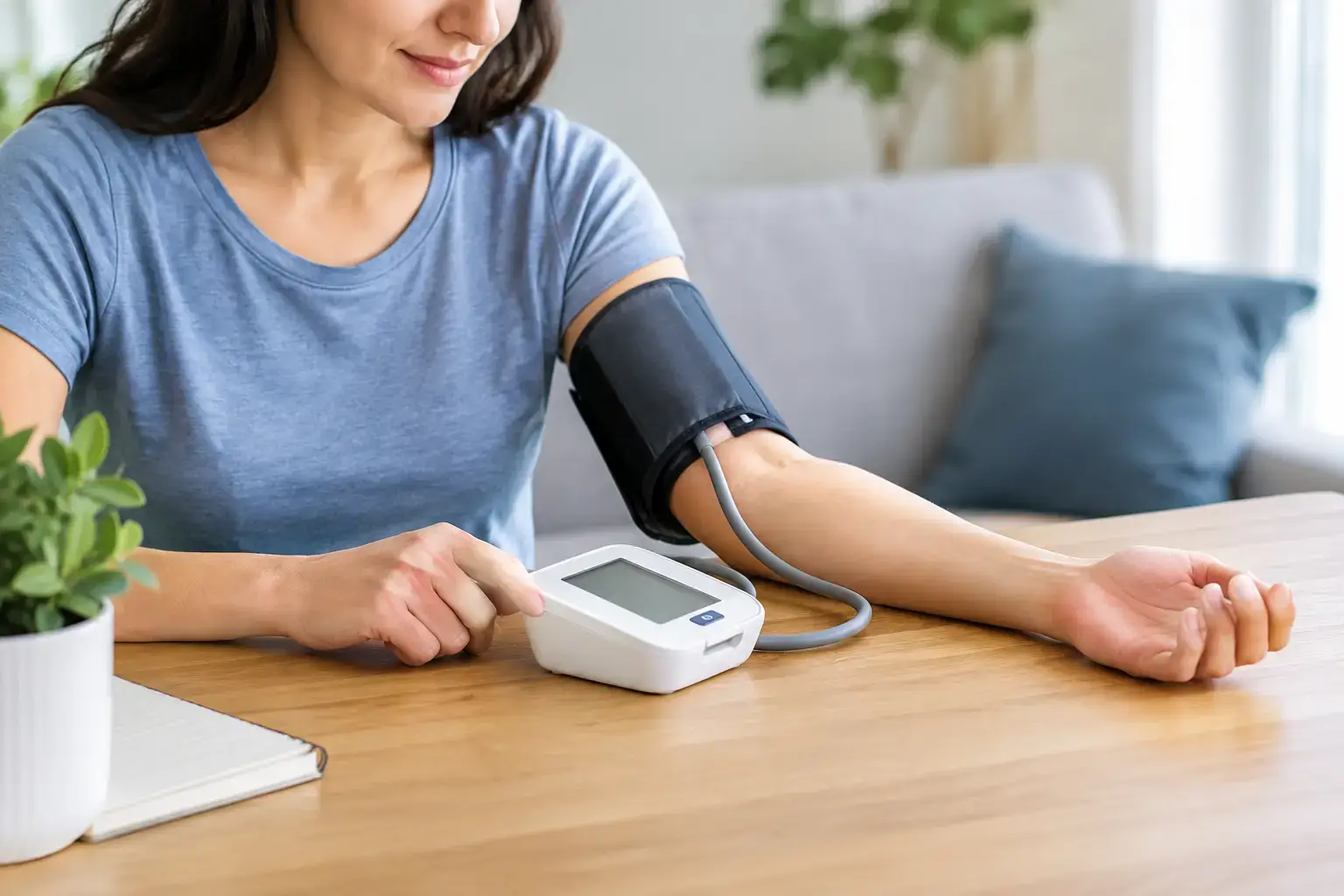
Sit in a chair with your back supported and both feet flat on the floor. Do not cross your legs. Rest your bare arm on a table so the cuff is level with your heart. Place the cuff directly on skin, not over a sleeve, and avoid talking, texting, or watching something stressful during the measurement.
Take two readings about one minute apart and record both. If the numbers are very different, take a third reading and note it. Your provider will usually focus on the average and the overall pattern rather than one isolated result.
For a new home blood pressure routine, your provider may ask you to check readings twice daily for several days to a week. Follow the plan you are given. Checking too often can create anxiety and may lead you to react to normal, temporary changes instead of the bigger picture.
What to Record in Your Blood Pressure Log
Your log does not need to be complicated. Record the date, time, top number, bottom number, and pulse rate if your monitor provides it. Also note anything that could help explain an unusual reading, such as a headache, dizziness, missed medication, poor sleep, illness, pain, caffeine, or a stressful event.
For example, a useful entry might read: “Tuesday, 7:15 a.m., 128/78, pulse 72. Before breakfast and medication. Slept well.” This context can help your provider distinguish a meaningful change from a one-time fluctuation.
Digital notes, a spreadsheet, or a paper chart all work. The best system is the one you will use consistently. If you manage blood pressure for an older parent or family member, keeping the log in one shared, easy-to-find place can make appointments and medication discussions much easier.
Understanding the Numbers Without Overreacting
Blood pressure is written as two numbers. The top number, systolic pressure, measures pressure when the heart contracts. The bottom number, diastolic pressure, measures pressure when the heart relaxes between beats.
For many adults, a normal reading is less than 120/80 mm Hg. Readings from 120 to 129 on the top number with a bottom number below 80 may be considered elevated. Repeated readings of 130/80 or higher may indicate high blood pressure, depending on your medical history and your provider’s assessment.
One high reading does not automatically mean you have hypertension or need a medication change. Rest for five minutes and repeat the measurement using proper technique. Then record the result. Persistent higher readings deserve a conversation with your primary care provider, particularly if you have diabetes, kidney disease, heart disease, a history of stroke, or a strong family history of high blood pressure.
Low readings can also matter, especially if they come with lightheadedness, fainting, weakness, confusion, or falls. A number that may be acceptable for one person can be too low for another. Age, medications, hydration, and underlying conditions all affect what is appropriate.
Know When to Call for Help
Call 911 right away if your blood pressure is 180/120 or higher and you have symptoms such as chest pain, shortness of breath, sudden severe headache, weakness or numbness, trouble speaking, vision changes, confusion, or severe back pain. These symptoms may signal a medical emergency.
If you get a reading of 180/120 or higher without those symptoms, wait at least five minutes, sit quietly, and recheck it. If it remains that high, contact your medical provider promptly for guidance. Do not take extra medication unless a clinician has specifically told you to do so.
You should also contact your provider for repeated readings above the range they have set for you, new symptoms, medication side effects, or readings that are consistently much lower than usual. Fast access to a familiar primary care team can prevent uncertainty from turning into an urgent care or emergency room visit when it is not needed.
Make Your Log Part of Your Care Plan
Home tracking works best when it supports, rather than replaces, regular medical care. Bring your monitor and log to annual physicals, medication follow-ups, and visits for concerns such as headaches, dizziness, diabetes, or heart symptoms. Your provider can review trends, check your technique, and decide whether lifestyle changes, testing, or medication adjustments are appropriate.
Small daily habits can support healthier readings: taking medication as prescribed, limiting excess sodium, staying active within your abilities, getting enough sleep, managing stress, and avoiding tobacco. But changes should be realistic. If a demanding schedule, childcare, shift work, or chronic pain makes a perfect routine difficult, start with one dependable check each day and build from there.
At Castle Hills Family Practice, patients can discuss home readings with a primary care team that can help connect the numbers to the rest of their health picture. A reliable blood pressure log is more than a list of measurements. It is a practical record that helps you ask better questions, make informed decisions, and get care at the right time.