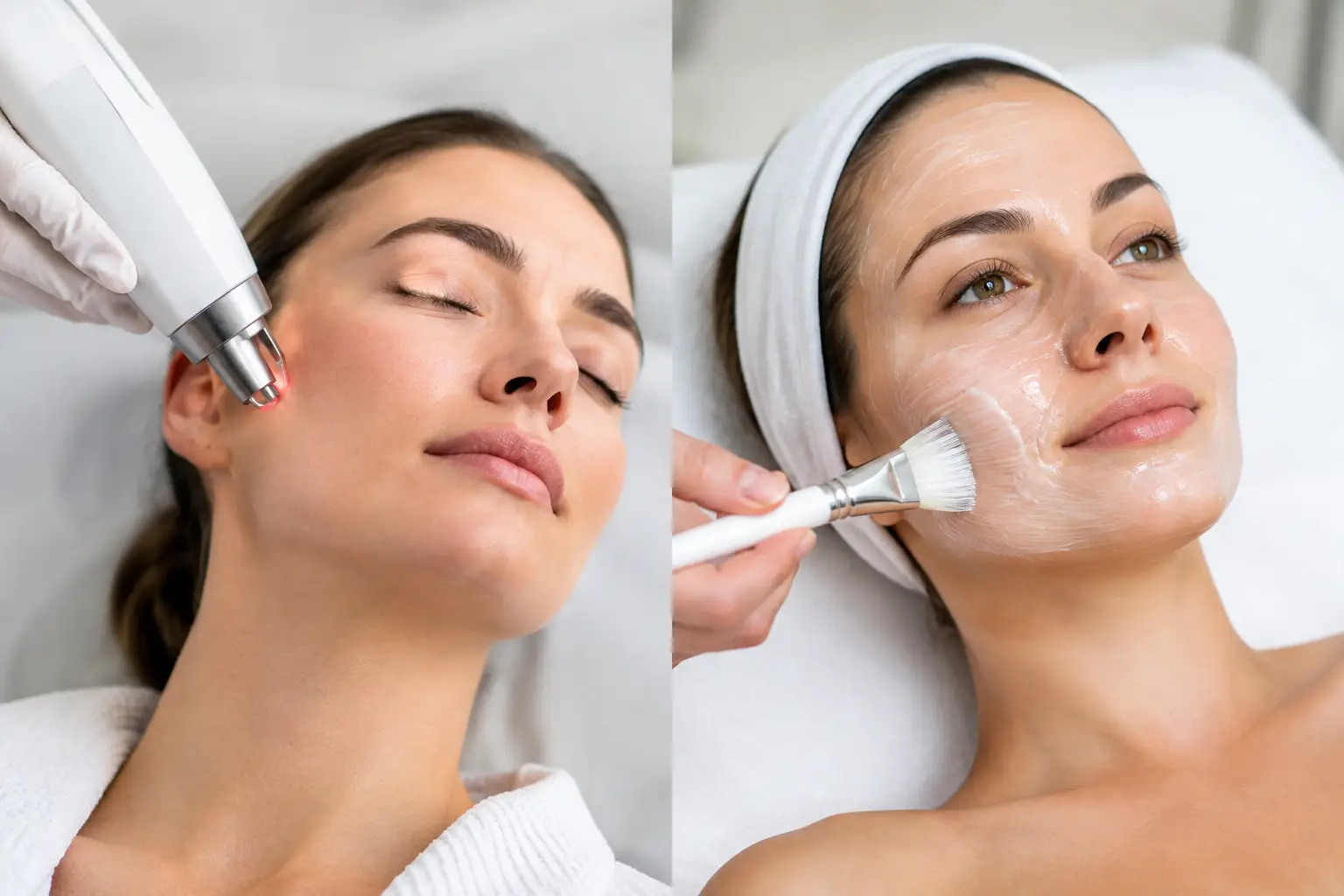
A treatment can sound simple until you are deciding between a few days of visible peeling and a longer period of redness, flaking, and careful sun avoidance. When comparing laser resurfacing versus chemical peel, the best choice is rarely the strongest treatment available. It is the treatment that addresses your main concern while fitting your skin type, schedule, budget, and tolerance for downtime.
Both options can improve texture, discoloration, fine lines, acne scarring, and sun-related damage. They work differently, however, and those differences matter. A thoughtful consultation helps ensure your treatment plan supports healthy-looking results rather than unnecessary irritation.
How laser resurfacing and chemical peels work
Laser resurfacing uses concentrated light energy to create controlled changes in the skin. Some lasers remove the outermost layers of skin, while others deliver heat below the surface without removing as much tissue. By prompting the skin’s healing response and collagen production, laser treatments can gradually improve tone, texture, and firmness.
Chemical peels use an acid solution to exfoliate the skin at a controlled depth. Superficial peels may use ingredients such as glycolic, lactic, salicylic, or mandelic acid. Medium and deeper peels reach farther into the skin and can address more pronounced sun damage, uneven pigment, and wrinkles, but they also require more recovery.
Neither treatment is automatically better. The meaningful comparison is between a particular laser and a particular peel, at a particular strength, for a particular patient.
Laser resurfacing versus chemical peel: key differences
The most noticeable difference is often precision. A laser provider can treat specific areas, such as acne scars on the cheeks or fine lines around the mouth, while limiting treatment of surrounding skin. Lasers also offer different settings that may be adjusted for the concern being treated.
A peel is generally applied across a broader area, although it can be customized in several ways. It may be an excellent choice for widespread dullness, mild discoloration, or active acne concerns. For some patients, a series of lighter peels creates a practical, gradual improvement with less disruption to work and family routines.
Results can differ as well. Ablative laser resurfacing and deeper peels may create more dramatic changes, but they involve more healing time and greater risk if they are not selected and performed carefully. Non-ablative laser treatments and superficial peels tend to produce subtler results with shorter recovery, often over a series of appointments.
Which concerns respond best?
Fine lines, uneven texture, enlarged pores, and mild sun damage may respond well to either treatment. The decision often comes down to the degree of correction desired and how much downtime is realistic.
Laser resurfacing can be a strong option for more defined concerns, including certain acne scars, deeper lines, and uneven texture. Fractional laser treatments leave areas of untreated skin between treatment zones, which can support healing while still stimulating renewal. Not every laser is appropriate for every concern, so the device and settings matter as much as the word “laser.”
Chemical peels are often useful for acne, post-inflammatory discoloration, melasma-prone skin, mild roughness, and a dull complexion. Salicylic acid peels, for example, can be helpful for oily or acne-prone skin. Other formulas may be chosen for dryness, visible pigment, or sensitive skin. A peel can also complement a broader skin-care plan rather than replace it.
Downtime is part of the decision
A light peel may cause temporary tightness, redness, and flaking for several days. Some people can return to normal activities quickly, though makeup and active skin-care ingredients may need to wait until the skin has settled. Medium and deep peels have more substantial peeling and a longer healing process.
Recovery after laser resurfacing ranges widely. With gentler non-ablative treatments, redness or swelling may last a day or two. Ablative laser resurfacing can involve oozing, crusting, significant redness, and a recovery period that may extend for one to two weeks or longer. Skin can remain pink and sensitive after the initial healing period.
For busy San Antonio families, timing is worth considering before booking. Avoid scheduling an intensive treatment right before a wedding, vacation, outdoor event, or period when you cannot reliably avoid sun exposure. Heat and strong Texas sun can make diligent aftercare especially important.
Skin tone, pigment, and safety
People with medium to deep skin tones can safely pursue many resurfacing treatments, but treatment selection requires care. Any procedure that creates inflammation can trigger post-inflammatory hyperpigmentation, meaning dark marks may appear after healing. A history of melasma, keloid scarring, cold sores, eczema, or recent tanning should be part of the conversation.
Superficial peels and carefully selected non-ablative laser treatments may be appropriate for many patients, but there is no universal rule. Deeper treatments may carry greater pigment risk for some skin types. An experienced clinician may recommend pre-treatment skin care, a test area, conservative settings, or a gradual series instead of one aggressive session.
Do not use retinoids, exfoliating acids, or certain acne products immediately before or after treatment unless your provider specifically instructs you to do so. Tell your clinician about all medications, supplements, active rashes, and prior cosmetic procedures. These details help prevent avoidable complications.
What does treatment feel like?
Most patients describe superficial peels as tingling, warmth, or mild stinging that fades quickly. Stronger peels may be more intense. Laser treatments can feel like quick snaps of heat against the skin. Topical numbing cream, cooling methods, or other comfort measures may be used depending on the laser and depth of treatment.
After either procedure, gentle care matters. Use the cleanser, moisturizer, and sun protection recommended by your clinician. Do not pick, scrub, or pull at peeling skin. This can delay healing and increase the chance of discoloration or scarring.
Cost and treatment planning
Pricing varies according to the treatment area, type of laser or peel, depth, provider expertise, and number of sessions needed. A light peel may have a lower cost per session but require a series. A more intensive laser treatment may cost more upfront yet be planned as a single procedure with a longer recovery period.
The lowest price is not always the best value. A rushed treatment or a treatment that is too aggressive for your skin can lead to longer downtime and corrective care. Ask what results are realistic, how many treatments are recommended, what aftercare is included, and what signs should prompt a call to the office.
Choosing the right starting point
Begin with your top priority. If your goal is a refreshed appearance before a milestone and you need limited downtime, a superficial peel or gentler laser may make sense. If acne scars or deeper wrinkles are the concern, a more targeted laser plan may be worth the additional recovery. If you are prone to pigment changes, a conservative plan may be the safest and most effective route.
At Castle Wellness & Laser Center, the conversation should start with your health history, skin goals, daily sun exposure, and comfort with recovery time. A personalized assessment is more useful than choosing a procedure based on before-and-after photos alone.
Healthy results are built before and after the appointment: protect your skin from the sun, follow preparation instructions closely, and give healing skin the patience it needs. The right treatment should leave you feeling cared for at every step, not pressured to recover on someone else’s timeline.