Sunspots can make skin look older than it feels, especially on the face, chest, shoulders, and hands – the areas that have received years of Texas sun exposure. So, does laser treatment reduce sunspots? For many people, yes. Laser treatment can significantly fade sunspots and, in some cases, make them far less noticeable after a properly selected treatment plan. Results depend on the type and depth of pigmentation, your skin tone, the laser used, and how carefully you protect your skin afterward.
Sunspots are common, but they are not all the same. A clinical evaluation is the right first step before treating a dark spot cosmetically. A spot that is new, changing, irregular, itchy, bleeding, or very different from others should be assessed by a medical professional rather than treated with a laser first.
How laser treatment reduces sunspots
Sunspots, also called solar lentigines or age spots, develop when repeated ultraviolet exposure prompts the skin to produce and cluster extra pigment. They are usually flat, tan, brown, or gray-brown marks. Despite the name, they can appear well before older adulthood, particularly in people who spend significant time outdoors without consistent sun protection.
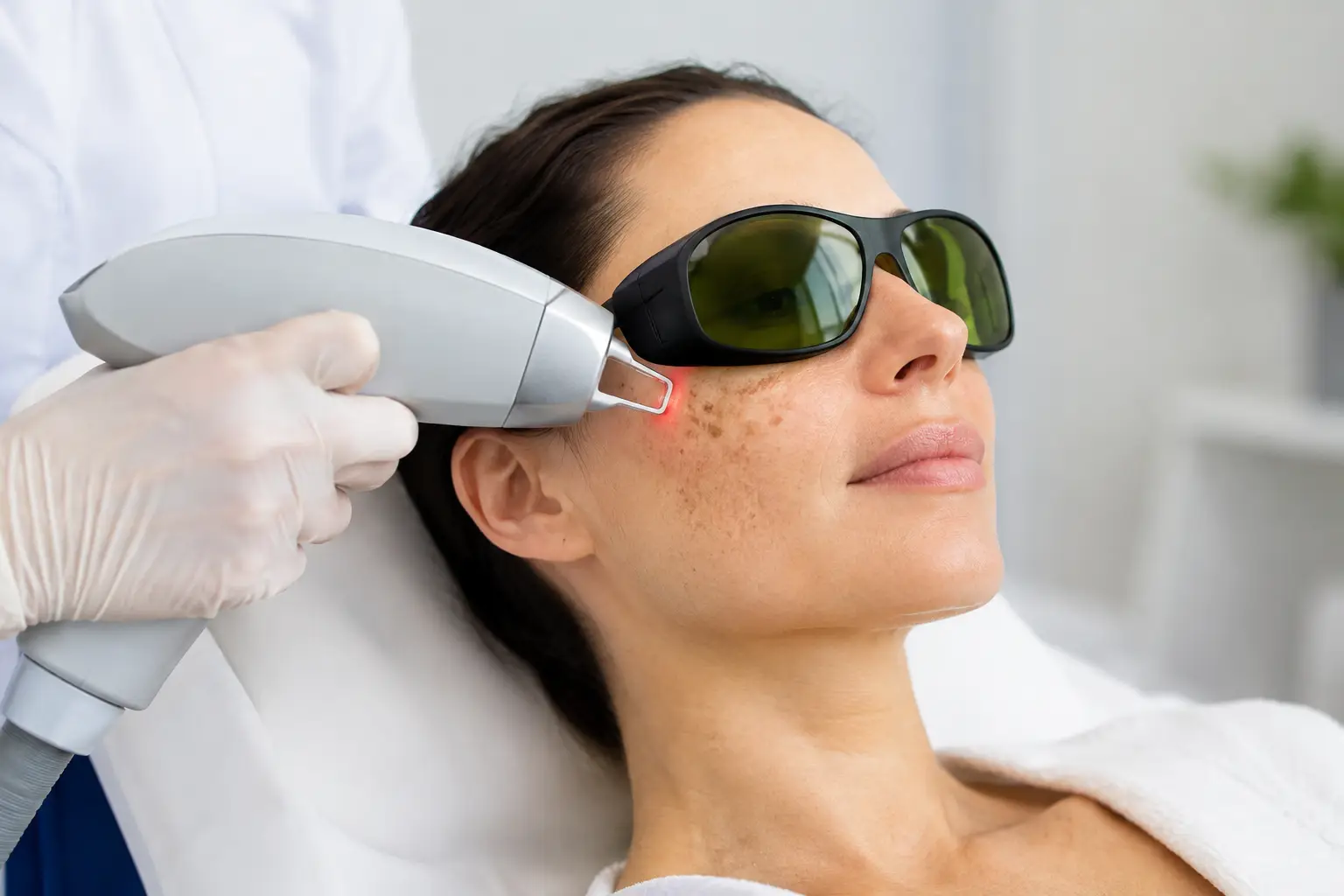
Laser devices use focused light energy that is absorbed by melanin, the pigment that gives sunspots their color. The targeted pigment heats up and breaks into smaller particles. Your body then gradually clears those particles through its natural healing process, allowing the spot to fade.
The appeal is precision. Rather than treating all surrounding skin equally, a laser can focus energy on the excess pigment. That said, the best device and settings are not one-size-fits-all. A provider considers the location of the spots, your skin tone, the contrast between the spot and nearby skin, previous treatments, and your history of pigmentation changes or scarring.
Does laser treatment reduce sunspots after one visit?
Sometimes one treatment produces a clear improvement, especially for a small number of distinct, superficial sunspots. More often, patients need a series of treatments or a combination approach to achieve their preferred level of fading. The number of sessions can vary based on the laser technology, the density of pigmentation, and how your skin responds.
Immediately after treatment, a sunspot may look darker. This can be expected as the pigment reacts to the laser energy. Over the next several days to a couple of weeks, treated spots may darken, feel slightly rough, and then flake away or gradually lighten. It is tempting to scrub or pick at the area, but doing so can irritate the skin and raise the risk of discoloration or scarring.
A realistic goal is improvement, not perfection. Laser treatment can fade existing spots, but it cannot erase your skin’s history of sun exposure or prevent new pigmentation from forming. Daily sun protection is what helps protect the result.
What results can look like
Results are often most noticeable when the skin has healed fully and any short-term redness or darkening has resolved. Some people see a more even-looking complexion, while others find that stubborn or deeper spots become lighter but remain visible. Melasma, a patchy form of pigmentation often influenced by hormones, heat, and sunlight, can behave differently from true sunspots and may worsen with certain energy-based treatments. That is one reason an accurate assessment matters.
Who may be a good candidate for laser sunspot treatment?
Adults bothered by stable, flat sunspots may be good candidates if they can follow aftercare instructions and limit sun exposure during healing. People with lighter skin tones are often treated more easily because the contrast between the spot and surrounding skin helps the laser target pigment. However, people with deeper skin tones can also be treated safely when an experienced provider selects appropriate technology and conservative settings.
Treatment may need to be delayed if you have an active rash, cold sore outbreak near the treatment area, open skin, a recent tan, or certain medications that increase light sensitivity. Pregnancy, a history of keloid scars, and prior post-inflammatory hyperpigmentation are also important topics to discuss during a consultation.
A qualified provider should ask about your health history, current medications, skincare products, past reactions to procedures, and time spent in the sun. Retinoids, exfoliating acids, and some acne treatments may need to be paused before or after treatment, depending on the plan. Do not stop prescription medication without medical guidance.
Recovery and aftercare matter as much as the treatment
Most laser treatments for sunspots involve limited downtime, but “limited” does not mean no care is needed. Mild warmth, redness, swelling, or a sensation similar to a sunburn can occur shortly after treatment. Many people return to regular activities quickly, but the skin should be treated gently while it heals.
Your provider may recommend a bland moisturizer, gentle cleanser, cool compresses, and avoiding heat exposure for a short period. Skip harsh scrubs, exfoliating tools, and active skincare products unless your provider says they are appropriate. Makeup may be fine after certain treatments, but follow the specific guidance you receive.
The most important aftercare step is broad-spectrum sunscreen. Choose SPF 30 or higher and apply it every morning to exposed skin, even when the forecast is cloudy. Reapply when you are outdoors, sweating, or spending extended time near windows. A wide-brimmed hat, sunglasses, and shade offer extra protection, particularly during San Antonio’s bright, high-UV months.
Without consistent protection, new sunspots can develop and previously treated areas can darken again. Sunscreen is not an optional add-on to laser care. It is part of preserving the investment you made in your skin.
Risks and trade-offs to discuss first
Laser treatment is generally well tolerated when performed appropriately, but no cosmetic procedure is risk-free. Possible side effects include temporary redness, swelling, crusting, blistering, infection, or changes in skin color. Some patients develop lighter or darker patches after treatment, with a higher risk when skin is treated while tanned or when post-treatment sun exposure occurs.
Cost and timing are practical considerations, too. Laser sunspot treatment is usually elective and may not be covered by insurance. It also works best when you can avoid intense sun exposure around your appointments. If a beach vacation, outdoor tournament, or long workdays outside are coming up, it may be smarter to schedule treatment for another time.
Other options may be appropriate for some patients. Topical medications, chemical peels, cryotherapy, and other light-based treatments can help with certain pigment concerns. The right choice depends on the diagnosis, your skin type, the number of spots, recovery preferences, and budget.
Getting a personalized plan for sunspots
A consultation should feel straightforward, not rushed. You should leave knowing whether the spots appear appropriate for cosmetic treatment, what type of laser or alternative approach is being considered, how many sessions may be needed, and what recovery may involve. Ask what results are realistic for your skin and what steps can lower the chance of pigment changes.
Castle Wellness & Laser Center can help patients explore aesthetic options in a setting connected to established, patient-centered care. If you are concerned that a spot may be medically suspicious, bring that up before scheduling cosmetic treatment so it can be evaluated appropriately.
The best time to treat sunspots is when you are ready to protect your skin afterward. A thoughtful treatment plan, gentle healing, and daily sunscreen can help your skin look more even while giving new damage fewer chances to take hold.