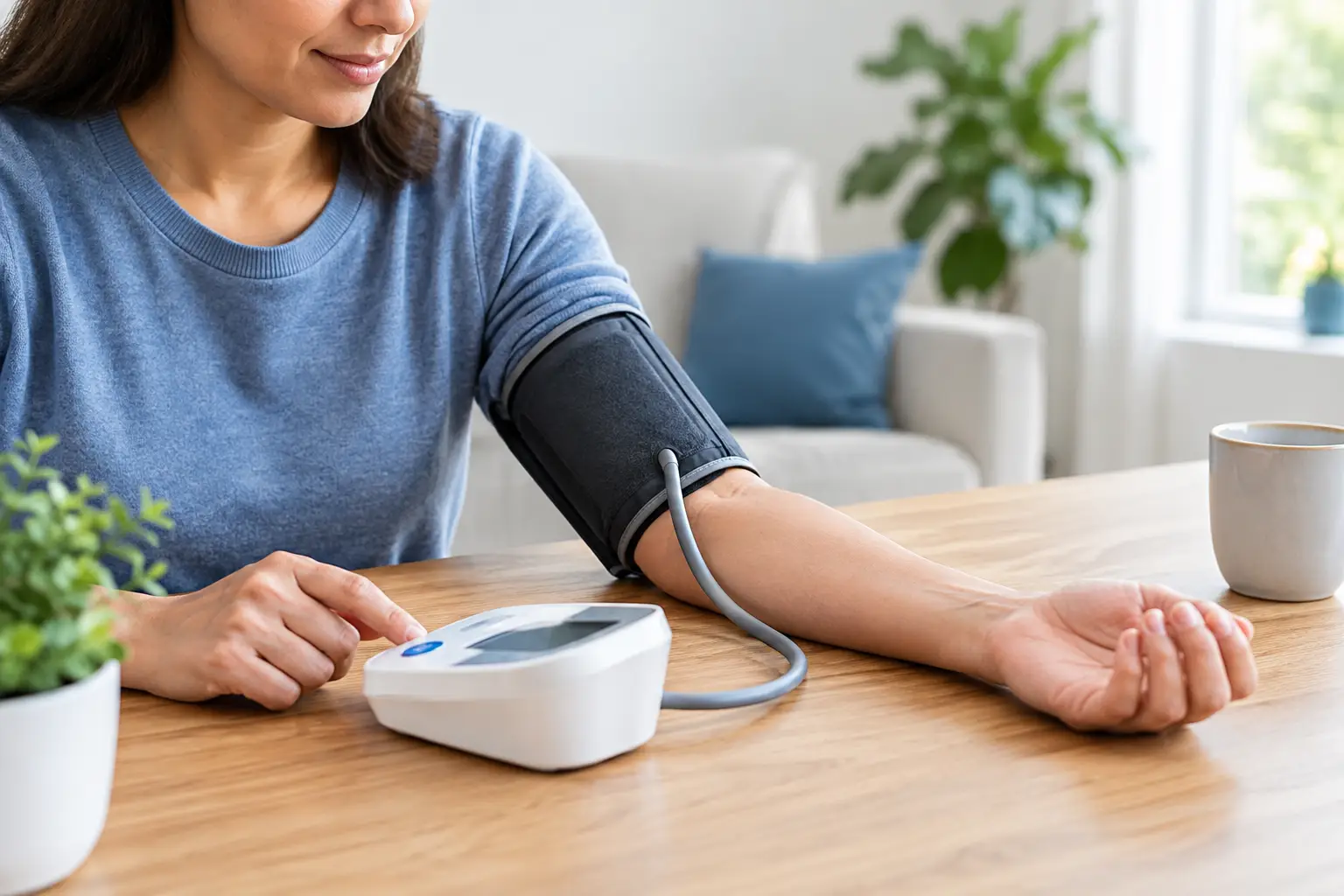
A blood pressure number can look concerning, reassuring, or simply confusing when it appears on a home monitor. This guide to blood pressure monitoring can help you get a reading you and your primary care provider can trust, without turning every single measurement into a source of stress.
Blood pressure naturally changes throughout the day. It can rise after a rushed morning, a salty meal, caffeine, pain, exercise, or a difficult conversation. The goal of home monitoring is not to capture one perfect number. It is to understand your usual pattern and give your care team useful information for preventive care, medication decisions, and long-term heart health.
What Your Blood Pressure Numbers Mean
Blood pressure is recorded with two numbers, such as 118/76 mm Hg. The top number, called systolic pressure, measures the pressure in your arteries when your heart beats. The bottom number, called diastolic pressure, measures the pressure when your heart relaxes between beats.
For most adults, a reading below 120/80 is considered normal. Readings with a top number from 120 to 129 and a bottom number below 80 are considered elevated. High blood pressure, also called hypertension, begins at 130/80 when readings are consistently in that range or higher.
A single high reading does not automatically mean you have hypertension. Your provider will consider repeated home readings, office readings, your medical history, current medications, and factors such as diabetes, kidney disease, pregnancy, or a family history of heart disease. Consistency matters more than one unexpected result.
Choose a Monitor That Fits Correctly
An automatic upper-arm cuff is generally the best choice for home use. Wrist and finger monitors can be convenient, but they are often more sensitive to body position and may be less reliable. Look for a monitor that has been clinically validated and displays both your blood pressure and pulse.
Cuff size matters just as much as the monitor itself. A cuff that is too small may give a falsely high result, while one that is too large may give a lower reading than expected. Measure around the middle of your upper arm or check the cuff packaging for its sizing range. If you are uncertain, bring your monitor to a primary care visit so your provider can help check the fit and compare it with an office reading.
Keep your monitor somewhere visible and easy to use, such as near your medications or morning coffee supplies. A device that stays in a closet rarely becomes part of a helpful routine.
How to Get an Accurate Blood Pressure Reading
Small details can change a reading by more than people expect. Before checking your blood pressure, avoid smoking, caffeine, alcohol, and exercise for at least 30 minutes when possible. Use the restroom first, since a full bladder can raise blood pressure temporarily.
Sit quietly for five minutes before starting. Rest with your back supported, both feet flat on the floor, and legs uncrossed. Place your bare arm on a table so the cuff is at heart level. Clothing under the cuff, talking, scrolling on your phone, or holding your arm up without support can affect the result.
Wrap the cuff snugly around your upper arm, following the monitor instructions. Take two readings about one minute apart and write down both, or record the average if your device calculates it. If the first number is unexpectedly high, pause, breathe normally, and repeat it rather than reacting immediately.
For a new monitoring routine, many providers recommend checking twice daily for several days: once in the morning before medication, food, or coffee, and again in the evening. Your individual plan may be different, especially if you take blood pressure medicine or are being evaluated for symptoms. Ask your provider how often to check, because measuring too frequently can create anxiety without providing better information.
Keep a Blood Pressure Log Your Provider Can Use
A useful log includes more than the two numbers. Record the date, time, blood pressure, pulse, and any notes that may explain an unusual result. For example, note whether you had a headache, missed a dose of medication, felt ill, drank coffee shortly before checking, or had just returned from work.
A paper log works well, but a phone note or monitor app can be convenient if it is easy to share during appointments. Bring your monitor and your readings to annual physicals and follow-up visits. A pattern of morning readings that runs higher than evening readings, for example, may help guide the next step in your care.
Try not to check immediately after seeing a number you dislike, over and over again. Repeatedly measuring while worried can keep your body tense and make the numbers harder to interpret. Follow the plan you and your provider have agreed on, and focus on trends over days and weeks.
When to Call Your Primary Care Provider
Schedule a conversation with your provider if your home readings are repeatedly 130/80 or higher, especially if you have diabetes, kidney disease, a history of heart disease, or other cardiovascular risk factors. Your provider may recommend lifestyle changes, additional testing, medication, or a period of structured home monitoring before making a diagnosis.
Do not stop or adjust blood pressure medication based on a home reading unless your prescribing provider tells you to do so. Medication timing, hydration, illness, and other prescriptions can all affect blood pressure. A quick conversation can help prevent a medication change that is not right for your situation.
Pregnant patients should contact their obstetric provider promptly for elevated readings or symptoms such as severe headache, vision changes, upper abdominal pain, sudden swelling, or shortness of breath. Blood pressure concerns during pregnancy need timely evaluation.
If your reading is higher than 180/120, wait at least five minutes and check again while seated correctly. If it remains that high, contact a medical professional right away for guidance. Call 911 or seek emergency care immediately if a high reading occurs with chest pain, shortness of breath, weakness or numbness, trouble speaking, confusion, severe headache, or vision changes.
Support Your Numbers Between Readings
Home monitoring works best alongside everyday habits that support heart health. Regular movement, better sleep, stress management, limiting tobacco, and taking medication as prescribed can all make a meaningful difference. Reducing sodium may help as well, although the right approach depends on your overall diet, health conditions, and treatment plan.
You do not need to overhaul your life overnight. A practical starting point may be walking after dinner several days a week, cooking one more meal at home, or keeping your medication beside something you use every morning. Small routines are easier to maintain, and they give you clearer feedback as you monitor your readings.
At Castle Hills Family Practice, primary care visits can help connect the dots between your blood pressure log, family history, medications, and overall health. In-office testing and timely appointments can make it easier to address concerns before they become more complicated.
Your blood pressure monitor is not there to judge you. It is a tool that helps you notice changes early, ask better questions, and work with a provider who knows your health history. Start with a consistent routine, bring your results to your next visit, and let the pattern guide the conversation.